

Plant Calculator
Enter the approximate length and width of the area you will be planting and click 'Calculate' to determine how many Asclepias curassavica you will need.
*Correct and successful spacing is complex and depends on project conditions.
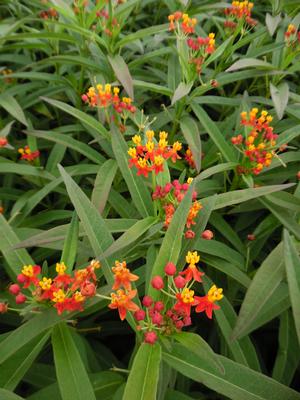
Milkweed, Tropical (Bloodflower)
Asclepias curassavica
- Avoid at all Cost!
- Category: Seasonal, Tropical, and Perennial Color, Trees & Shrubs, Discontinued
- Hardiness Zone: 8b
- Height: 36-48 Inches
- Spread: 36 Inches
- Bloom Color: Red, Yellow
Discontinued
Native to Mexico, the Tropical Milkweed has easily adapted to the southern United States. However, it has become identified as a danger to Monarch Butterflies, and should be avoided at all cost, despite it being readily available in many outlets.
Read More about it HereTropical milkweed becomes a problem when planted in temperate areas where it does not die back in winter. A protozoan parasite of monarch butterflies, Ophryocystis elektroscirrha or OE for short, can travel with monarchs visiting the plants and become deposited on leaves. When caterpillars hatch and start eating the plant, they ingest the OE. High OE levels in adult monarchs have been linked to lower migration success in the eastern monarch population, as well as reductions in body mass, lifespan, mating success, and flight ability.
When native milkweeds die back after blooming, the parasite dies along with them so that each summer’s monarch population feeds on fresh, parasite-free foliage. In contrast, tropical milkweed that remains evergreen through winter allows for OE levels to build up on the plant over time, meaning successive generations of monarch caterpillars feeding on the plant can be exposed to dangerous levels of OE.