


Plant Calculator
Enter the approximate length and width of the area you will be planting and click 'Calculate' to determine how many Muhlenbergia lindheimeri you will need.
*Correct and successful spacing is complex and depends on project conditions.
Muhlenbergia lindheimeri
Grass, Muhly
- Full sun
- Drought tolerant
- Texas native grass
- Category: Ornamental Grass
- Hardiness Zone: 7
- Height: 4-6 Feet
- Spread: 4-6 Feet
- Spacing: 4-5 ft
- Bloom Color: White
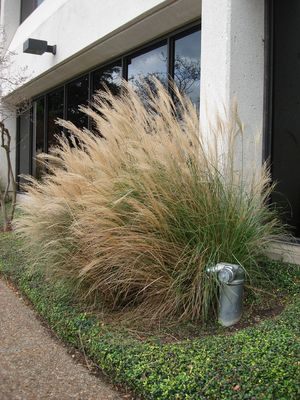
Lindheimer Grass (Muhlenbergia lindheimeri) is a Texas native ornamental grass valued for its strong architectural form and exceptional heat tolerance. Native to rocky slopes and limestone soils of Central and South Texas, it is long-lived, dependable, and well adapted to harsh, dry conditions. Unlike many softer muhly grasses, Lindheimer Grass provides bold structure year-round.
In the Texas landscape, Lindheimer Grass performs best in full sun to light shade and prefers well-drained soils, especially alkaline or limestone-based soils. It is extremely drought tolerant once established and does not tolerate poorly drained or constantly wet sites. This grass is deer resistant, non-toxic to pets, and well suited for low-water landscapes, commercial plantings, and naturalistic designs. Overwatering is the most common cause of failure, particularly in heavier soils.
Lindheimer Grass typically reaches 4–6 feet tall and wide, forming a large, upright clump with stiff blue-green blades that hold their shape through wind and heat. When planted in groups, space plants 4–5 feet apart to allow for mature spread and airflow. It works well as a specimen grass, mass planting, backdrop plant, or erosion control on slopes and berms. Flowering occurs in late summer to fall, with tall, airy flower spikes rising above the foliage and maturing to tan seed heads that persist into winter.
Winter foliage generally remains intact and attractive, though plants benefit from a hard cutback in late winter before new growth begins in spring. In colder winters, leaf tips may brown, but plants are fully cold hardy in Texas and reliably resprout with warming temperatures.