

Mortellaro's Nursery
Print This Page


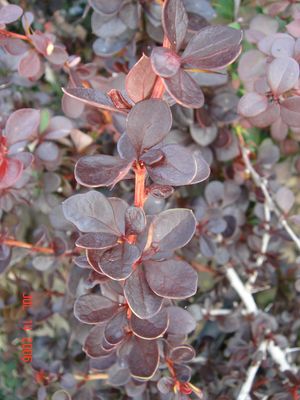
Barberry, Redleaf
Berberis thunbergii 'Atropurpurea'
Discontinued
Redleaf Barberry is a compact ornamental shrub long valued for its deep burgundy foliage and naturally dense, rounded form. Typically reaching about 3–5 feet tall and wide, it provides bold color contrast in foundation plantings, borders, or low hedges. Small yellow flowers appear in spring, followed by bright red berries that often persist into winter. The shrub tolerates a wide range of soil types and grows well in sun or partial shade, though the richest foliage color develops in full sun. Like most barberries, it is quite drought tolerant once established and generally avoided by deer due to its thorny stems.
Despite its ornamental appeal, Berberis thunbergii has become controversial in many parts of the United States. The plant is capable of escaping cultivation and forming dense thickets that crowd out native vegetation. Studies in northeastern forests have shown that these dense barberry stands create a humid environment near the ground that favors ticks and the small mammals that carry them, particularly mice. Areas heavily infested with Japanese barberry were found to support significantly higher tick populations than areas where the shrub had been removed.
While Lyme disease is much less common in Texas than in the northeastern United States, the ticks capable of spreading it do occur here. Because barberry can create dense, sheltered habitat that benefits ticks and the animals that host them, many landscape professionals now recommend avoiding it as a precaution. Even if the risk is lower in Texas, reducing places where ticks can thrive around homes and landscapes is generally considered good practice.
Ticks are also receiving more attention in Texas for another reason. In parts of East Texas, bites from the lone star tick (Amblyomma americanum) have been linked to a condition called alpha-gal syndrome, where people develop an allergic reaction to red meat such as beef or pork after being bitten. For Texans who take their barbecue seriously, that possibility hits especially close to home. Because of concerns like these, along with the plant’s invasive tendencies in some regions, we have chosen to discontinue growing Redleaf Barberry and encourage gardeners to select alternative shrubs better suited for modern landscapes.
 |
Burgundy foliage |
|
Thorny shrub |
|
Shade tolerant |
|
Height:3-5 Feet |
|
Spread:3-5 Feet |
|
Spacing:3-4 ft |
USDA Hardiness Zone 5
Characteristics & Attributes
|
Deer Tolerance
|
Exposure
|
Habit
|
Soil pH Preference
|
||||||||
|
Water Needs
|
