

Mortellaro's Nursery
Print This Page


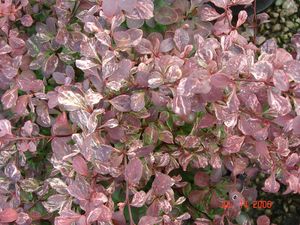
Barberry, Roseglow
Berberis thunbergii 'Rosy-Glow'
Discontinued
Rosy Glow Barberry is a striking ornamental shrub known for its colorful foliage splashed with shades of burgundy, pink, and rose. New growth emerges bright rosy red with light pink mottling, gradually maturing into deeper burgundy tones as the season progresses. This upright variety typically reaches about 4–6 feet tall and 3–4 feet wide, making it useful as a colorful accent shrub, informal hedge, or background planting where its unique foliage can stand out. Small yellow flowers may appear in spring, followed by bright red berries that can persist into winter.
Rosy Glow Barberry is adaptable to a wide range of soil conditions and performs best in full sun, where its colorful foliage develops the strongest contrast. Like other barberries, it is drought tolerant once established and its thorny branches make it naturally resistant to deer browsing. Historically, these traits made barberries popular landscape shrubs, particularly for barrier plantings and low-maintenance landscapes.
However, Japanese barberry species have become controversial in many parts of the United States. Dense barberry thickets can create a humid environment near the ground that favors ticks and the small mammals that host them. Studies in other regions have found significantly higher tick populations in areas dominated by barberry compared to areas where the plants had been removed. While Lyme disease remains relatively uncommon in Texas, ticks capable of carrying it do occur here, and reducing sheltered tick habitat around homes and landscapes is generally considered a wise precaution.
Ticks are also receiving increased attention in Texas for another reason. In parts of East Texas, bites from the lone star tick (Amblyomma americanum) have been linked to alpha-gal syndrome, a condition where people can develop an allergic reaction to red meat such as beef or pork after a tick bite. For Texans who enjoy their barbecue, that possibility hits especially close to home. Because of these concerns, along with the plant’s invasive tendencies in some regions, our nursery has chosen to discontinue growing Rosy Glow Barberry and encourages gardeners to consider alternative shrubs better suited to modern Texas landscapes.
 |
Variegated foliage |
|
Thorny shrub |
|
Height:4-6 Feet |
|
Spread:3-4 Feet |
|
Spacing:3-4 ft |
USDA Hardiness Zone 5
Characteristics & Attributes
|
Deer Tolerance
|
Exposure
|
Habit
|
Soil pH Preference
|
||||||||
|
Water Needs
|
