


Plant Calculator
Enter the approximate length and width of the area you will be planting and click 'Calculate' to determine how many Butia capitata you will need.
*Correct and successful spacing is complex and depends on project conditions.
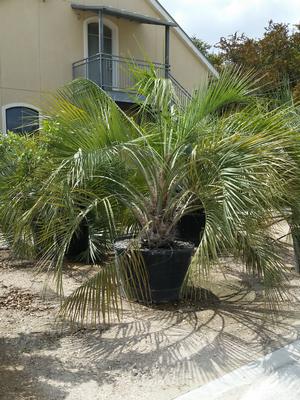
Palm, Pindo (Jelly Palm)
Butia capitata
- Cold hardy
- Blue-green foliage
- Edible fruit
- Category: Trees & Shrubs
- Hardiness Zone: 8b
- Height: 15-20 Feet
- Spread: 10-15 Feet
- Spacing: 8-12 feet
- Bloom Color: Pink, Purple
Pindo Palm or Jelly Palm, is a cold-hardy palm valued for its graceful, feathery arching blue-gray fronds and stout trunk. Native to South America, it brings a softer, more textured tropical look compared to fan palms. Its curved leaves and compact canopy make it especially attractive as a specimen in Texas landscapes.
Pindo Palm performs best in full sun and well-drained soils. It tolerates alkaline soils common in Central Texas but requires excellent drainage, especially in winter. Once established, it is moderately drought tolerant but benefits from occasional deep watering during extended dry periods. Poor drainage is the most common cause of decline. It also tolerates heat and reflected sun well, making it suitable for exposed planting sites.
In the landscape, Pindo is most often used as a specimen palm, courtyard accent, or focal point in mixed plantings. Mature size typically reaches 15–20 feet tall with a canopy spread of 10–15 feet. When planting multiple palms, spacing them 8–12 feet apart allows proper canopy development. Mature plants produce clusters of orange-yellow fruit that are edible and often used for making jelly, which gives the plant its common name. It is generally considered deer resistant.
Pindo Palm is non-toxic to pets and people. It is hardy into USDA Zone 8 and can tolerate temperatures into the mid-teens once established, making it one of the more reliable feather palms for Central Texas. Severe freezes may burn foliage, but established plants usually recover in spring. Protecting the crown during extreme cold events improves survival and reduces cosmetic damage.
Growing & Maintenance Tips for Butia capitata
The large amount of fruits can be messy, but easy to trim.