


Plant Calculator
Enter the approximate length and width of the area you will be planting and click 'Calculate' to determine how many Ficus pumila you will need.
*Correct and successful spacing is complex and depends on project conditions.
Ficus pumila
Fig Vine
- Evergreen vine
- Wall climber
- Mild toxicity
- Category: Vines and Groundcovers
- Hardiness Zone: 8b
- Spread: 30 Feet
- Spacing: 3-5 ft
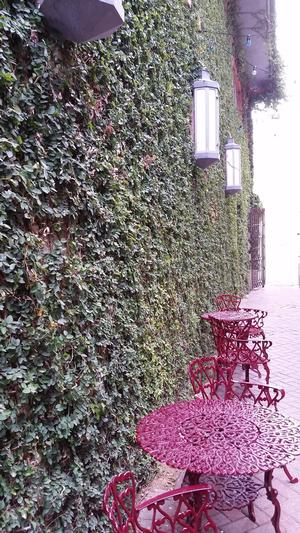
Fig Vine, more accurately known botanically as Ficus pumila (often still sold under the older name Ficus repens), is an evergreen climbing vine prized for its ability to tightly cling to masonry, stone, and concrete surfaces. It is not native to Texas, but it performs well in warmer parts of the state, particularly in Central and South Texas. It is hardy in USDA Zones 8b–11 and may experience freeze damage in colder winters, especially in North Texas. In our region, it’s best used in protected exposures such as courtyard walls or shaded east-facing structures.
In the Texas landscape, Fig Vine is most often used to cover brick walls, chimneys, fences, and foundations where a dense, uniform green surface is desired. It clings by aerial rootlets and does not require trellising, making it ideal for vertical applications. Juvenile growth has small, delicate leaves that form a tight mat, while mature growth (if allowed to climb high and thicken) produces much larger, leathery leaves and woody stems. It prefers part sun to shade in Texas; too much harsh afternoon sun can scorch foliage, especially during extreme summer heat. It prefers acidic areas, but adapts to alkaline as long as in well-drained soils and benefits from moderate irrigation during establishment.
All parts of the plant contain a milky sap that can irritate skin in sensitive individuals, and ingestion may cause mild stomach upset, so it should be considered mildly toxic. Deer typically avoid it. Once established, it becomes drought tolerant but can grow aggressively and may require regular trimming to keep windows, gutters, and rooflines clear. Older stems do produce inedible fig looking fruits. Mature size is variable depending on structure, but vines can easily exceed 20–30 feet in length. When planting along a wall, spacing 3–5 feet apart allows for solid coverage within a few growing seasons.
In Central Texas, severe freezes may burn foliage to the ground, but established root systems often resprout in spring. In colder areas, planting in a protected microclimate significantly improves winter survival.