


Plant Calculator
Enter the approximate length and width of the area you will be planting and click 'Calculate' to determine how many Parkinsonia aculeata you will need.
*Correct and successful spacing is complex and depends on project conditions.
Retama Tree (Mexican Palo Verde)
Parkinsonia aculeata
- Texas Native
- Extreme drought
- Prolific yellow blooms
- Category: Trees & Shrubs
- Hardiness Zone: 8a
- Height: 15-25 Feet
- Spread: 15-20 Feet
- Spacing: 10 Feet
- Bloom Color: Yellow
| Item | Size | Avail | Your Price | Qty |
|---|---|---|---|---|
| RET-AMA-15 | #015 | Out of Stock | Login for Pricing | |
RET-AMA-15
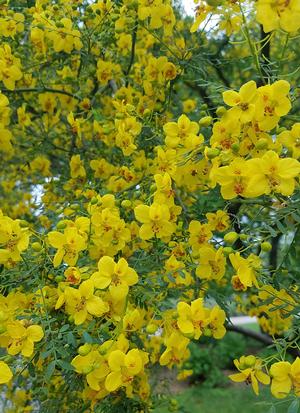
Retama or Mexican Palo Verde, is a Texas native small tree recognized for its airy canopy, green photosynthetic bark, and bright yellow spring flowers. It has a light, open structure with fine foliage that casts filtered shade, making it well suited for hot, exposed landscapes. Retama is especially common in South and Central Texas and along roadways due to its extreme toughness and heat tolerance.
Retama thrives in full sun and prefers well-drained soils but is highly adaptable to poor, rocky, sandy, and alkaline soils. It performs exceptionally well in caliche and other low-organic soils where many trees struggle. Once established, it is extremely drought tolerant and requires little to no supplemental irrigation. Poor drainage or overly irrigated sites should be avoided, as excessive moisture can shorten its lifespan.
In the landscape, Parkinsonia aculeata is most often used as a small shade tree, accent tree, or for naturalized and restoration plantings. Mature size typically ranges from 15–25 feet tall and 15–20 feet wide. Showy yellow flowers appear in spring and may reoccur sporadically during warm months, attracting pollinators. Retama is considered deer tolerant and is valued for wildlife use, though it can reseed in favorable conditions if not managed.
Retama is toxic if ingested, particularly the seeds, which contain compounds harmful to livestock, pets, and people. It also has sharp thorns along its branches, so placement away from pedestrian areas is recommended. The tree is fully cold hardy throughout most of Texas and requires little winter care. Occasional structural pruning while young helps develop a strong form and reduces thorn-related hazards.