


Plant Calculator
Enter the approximate length and width of the area you will be planting and click 'Calculate' to determine how many Quercus shumardii you will need.
*Correct and successful spacing is complex and depends on project conditions.
Oak, Red
Quercus shumardii
- Large oak
- Large shade cover
- Texas native
- Category: Trees & Shrubs
- Hardiness Zone: 5a
- Height: 60-80 Feet
- Spread: 40-50 Feet
- Spacing: 30-40 in
| Item | Size | Avail | Your Price | Qty |
|---|---|---|---|---|
| OAK-RED-01 | #001 | Out of Stock | Login for Pricing | |
| OAK-RED-05 | #005 | Out of Stock | Login for Pricing | |
| OAK-RED-15 | #015 | Low Stock | Login for Pricing | |
| OAK-RED-30 | #030 | Low Stock | Login for Pricing | |
| OAK-RED-45 | #045 | Low Stock | Login for Pricing | |
| OAK-RED-95 | #095 | Low Stock | Login for Pricing | |
| OAK-RED-200 | #200 | Low Stock | Login for Pricing | |
OAK-RED-01
OAK-RED-05
OAK-RED-15
View Current CropOAK-RED-30
View Current CropOAK-RED-45
View Current CropOAK-RED-95
View Current CropOAK-RED-200
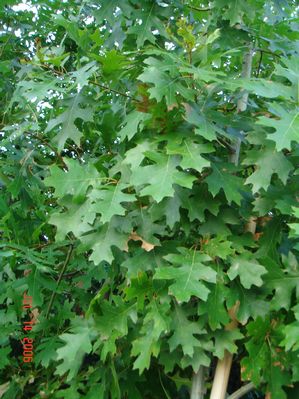
View Current CropShumard Red Oak is a large, long-lived shade tree native to Texas and widely found in river bottoms and deep soils across the state. It is one of the most dependable Red Oaks for Texas landscapes, valued for its strong structure, adaptability, and brilliant fall color ranging from deep red to red-orange in good years. In Central Texas, it performs best in deeper soils with moderate moisture and is often used as a legacy shade tree for large residential lots, parks, and commercial landscapes.
This oak prefers full sun and adapts to a range of soil types, including alkaline soils common in Central Texas, provided drainage is good. While more drought-tolerant than many other Red Oaks once established, it benefits from deep, occasional watering during prolonged summer drought. It is not considered poisonous, though acorns should not be consumed in large quantities by livestock. Deer may browse young trees, so protection is recommended during establishment. Mature size typically reaches 60–80 feet tall and 40–50 feet wide, with a broad, rounded canopy. When planting multiple trees, spacing 30–40 feet apart allows proper canopy development.
Shumard Red Oak is ideal as a primary shade tree, street tree (where space allows), or anchor specimen in large landscapes. It develops a straight trunk and strong branching structure when properly trained in youth, making early structural pruning important. Fall color is generally more reliable in North and Central Texas than in deep South Texas due to cooler autumn temperatures.
Oak Wilt Awareness:
Oak wilt is a serious concern in Central Texas. All oaks can be affected, though susceptibility varies by species. To reduce risk, avoid planting new oaks close to existing mature oaks where root systems may eventually connect. Never prune oaks during high-risk periods (generally February through June), as fresh cuts attract sap beetles that spread the disease. Many Texas municipalities enforce seasonal oak pruning restrictions, and in some areas pruning oaks during certain months is prohibited by ordinance. Always seal any necessary pruning cuts immediately with paint to help prevent infection.
Oak Wilt Groups :
Red Oak Group - Most susceptible; often fatal quickly
Live Oaks - Highly susceptible; spreads aggressively through root grafts
White Oak Group - More resistant; typically least severe
Shumard Red Oak (Quercus Shumardii) belongs to the Red Oak group
Attracts Wildlife
| • | Attracts Songbirds |
Critter Resistance
| • | Deer Resistant |
Exposure
| • | Full Sun |
Poor Drainage Tolerant
| • | No |
Habit
| • | Deciduous |
Texas Native
| • | Texas Native |
Deer Tolerance
| • | High |
Water Needs
| • | Low |