


Plant Calculator
Enter the approximate length and width of the area you will be planting and click 'Calculate' to determine how many Quercus virginiana you will need.
*Correct and successful spacing is complex and depends on project conditions.
Oak, Live
Quercus virginiana
- Iconic Southern Tree
- Evergreen Shade
- Large Landscape Specimen
- Category: Trees & Shrubs
- Hardiness Zone: 7b
- Height: 40-60 Feet
- Spread: 60-80 Feet
- Spacing: 40-60 ft
| Item | Size | Avail | Your Price | Qty |
|---|---|---|---|---|
| OAK-LIV-01 | #001 | Out of Stock | Login for Pricing | |
| OAK-LIV-05 | #005 | In Stock | Login for Pricing | |
| OAK-LIV-15 | #015 | Low Stock | Login for Pricing | |
| OAK-LIV-30 | #030 | Low Stock | Login for Pricing | |
| OAK-LIV-45 | #045 | Low Stock | Login for Pricing | |
| OAK-LIV-95 | #095 | Low Stock | Login for Pricing | |
| OAK-LIV-200 | #200 | Low Stock | Login for Pricing | |
| OAK-LIV-300 | #300 | Out of Stock | Login for Pricing | |
OAK-LIV-01
OAK-LIV-05
View Current CropOAK-LIV-15
View Current CropOAK-LIV-30
View Current CropOAK-LIV-45
View Current CropOAK-LIV-95
View Current CropOAK-LIV-200
View Current CropOAK-LIV-300
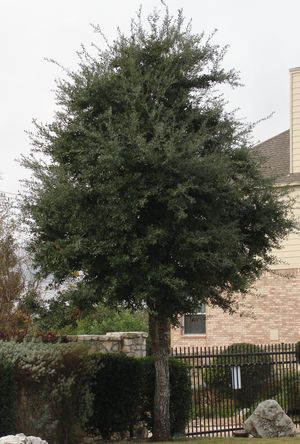
Live Oak is one of the most iconic and widely planted shade trees in Texas, known for its massive, spreading canopy and evergreen foliage. While Quercus virginiana is native to the southeastern United States and coastal regions, the Live Oaks commonly seen across Central and West Texas are often closely related to Escarpment Live Oak (Quercus fusiformis), which is the true interior Texas native. Over decades of nursery production and planting, Live Oak has become a defining tree of ranches, municipalities, and large residential landscapes throughout the state.
Live Oak thrives in full sun and is exceptionally well adapted to Texas heat, wind, drought, and alkaline soils once established. It prefers well-drained soils but tolerates heavy clay if not chronically waterlogged. It is not considered toxic, though acorns can cause minor digestive issues in livestock if consumed in large quantities. Deer may browse young trees but typically leave mature specimens alone. Mature size generally reaches 40–60 feet tall with a canopy spread of 60–80 feet or more, often wider than tall. When planting multiple trees, spacing 40–60 feet apart allows proper canopy development.
This tree is best used as a legacy shade tree, ranch specimen, windbreak component, or large property anchor. Its dense canopy provides exceptional summer shade, and although evergreen, it sheds older leaves briefly in early spring before pushing new growth. Early structural pruning is important to develop strong branch architecture capable of supporting its broad, heavy canopy for generations.
Oak Wilt Awareness:
Oak wilt is a serious concern in Central Texas. All oaks can be affected, though susceptibility varies by species. To reduce risk, avoid planting new oaks close to existing mature oaks where root systems may eventually connect. Never prune oaks during high-risk periods (generally February through June), as fresh cuts attract sap beetles that spread the disease. Many Texas municipalities enforce seasonal oak pruning restrictions, and in some areas pruning oaks during certain months is prohibited by ordinance. Always seal any necessary pruning cuts immediately with paint to help prevent infection.
Oak Wilt Groups :
Red Oak Group - Most susceptible; often fatal quickly
Live Oaks - Highly susceptible; spreads aggressively through root grafts
White Oak Group - More resistant; typically least severe
Live Oak (Quercus virginiana) belongs to the Live Oaks group
Critter Resistance
| • | Deer Resistant |
Exposure
| • | Full Sun |
Poor Drainage Tolerant
| • | No |
Habit
| • | Evergreen |
Texas Native
| • | Texas Native |
Deer Tolerance
| • | High |
Water Needs
| • | Low |