

Mortellaro's Nursery
Print This Page


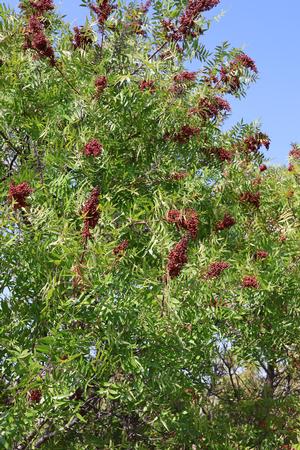
Flameleaf Sumac off I-10, Texas
Sumac, Flameleaf
Rhus lanceolata
Flameleaf Sumac is a Texas native small tree or large shrub valued for its toughness and outstanding fall color. It develops an open, multi-trunk form with glossy green foliage that turns brilliant shades of red, orange, and yellow in fall. Well adapted to Texas conditions, it is often used in naturalized landscapes and low-input plantings.
Flameleaf Sumac thrives in full sun and prefers well-drained soils but is highly adaptable to rocky, caliche, and alkaline soils common throughout Central and West Texas. It is extremely drought tolerant once established and performs poorly in consistently wet or poorly drained sites. Afternoon heat is not an issue for this plant, making it well suited for exposed locations where other small trees may struggle.
In the landscape, Sumac works well as a small shade tree, wildlife tree, or informal screen. It typically matures at 15–25 feet tall and 15–20 feet wide, often forming colonies through underground suckers if left unmanaged. Spacing plants 12–15 feet apart allows room for natural spread. Spring flowers are small and not very noticable, but female plants may produce red berry clusters that are attractive to birds. It is considered deer tolerant once established.
Flameleaf Sumac is not poisonous, but its sap can cause mild skin irritation in sensitive individuals when branches are cut or damaged, so gloves are recommended when pruning. It is cold hardy throughout most of Texas and requires little winter protection. Occasional thinning rather than heavy shearing helps maintain its natural form and reduces unwanted spreading.
 |
Drought tough |
|
Fall Color |
|
Texas native |
|
Height:15-25 Feet |
|
Spread:15-20 Feet |
|
Spacing:12-15 feet |
USDA Hardiness Zone 6b
Characteristics & Attributes
|
Deer Tolerance
|
Exposure
|
Habit
|
Soil pH Preference
|
||||||||
|
Water Needs
|
Texas Native
|
Tolerates Poor Drainage
|
