


Plant Calculator
Enter the approximate length and width of the area you will be planting and click 'Calculate' to determine how many Washingtonia filifera you will need.
*Correct and successful spacing is complex and depends on project conditions.
Palm, Washintonia (Palm, California Fan)
Washingtonia filifera
- Tall accent
- Drought tough
- Cold hardy palm
- Category: Trees & Shrubs
- Hardiness Zone: 8b
- Height: 40-60 Feet
- Spread: 10-15 Feet
- Spacing: 10-15 Feet
- Bloom Color: White
| Item | Size | Avail | Your Price | Qty |
|---|---|---|---|---|
| PLM-WAS-05 | #005 | Out of Stock | Login for Pricing | |
| PLM-WAS-15 | #015 | In Stock | Login for Pricing | |
| PLM-WAS-30 | #030 | In Stock | Login for Pricing | |
PLM-WAS-05
PLM-WAS-15
View Current CropPLM-WAS-30
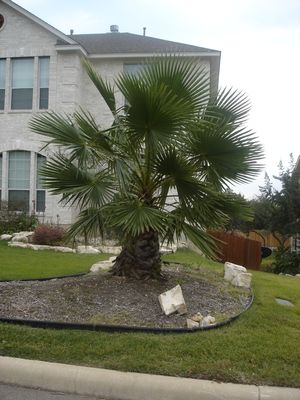
View Current CropWashingtonia Palm, or California Fan Palm, is a large, dramatic fan palm known for its massive trunk and bold architectural presence. Native to desert regions of the southwestern United States, it brings a strong vertical accent and classic Southwestern character to Texas landscapes. Its large, blue-green fan leaves and stout trunk give it a more substantial appearance compared to other fan palms.
Washingtonia thrives in full sun and prefers well-drained soils. It adapts well to alkaline soils and performs reliably in the limestone-based conditions common throughout Central Texas. Once established, it is highly drought tolerant and well suited to hot, exposed sites. Good drainage is essential, especially during winter, as saturated soils can reduce cold hardiness.
In the landscape, this palm is most often used as a tall specimen, boulevard tree, or focal point in large-scale plantings. Mature size typically reaches 40–60 feet tall with a canopy spread of 10–15 feet. When planting multiple palms, spacing them 10–15 feet apart allows for proper trunk and canopy development. Mature trees produce long flower stalks followed by small black fruits that attract birds. It is generally considered deer resistant.
Washingtonia Palm is non-toxic to pets and people. It is hardy into USDA Zone 8 and tolerates cold better than many other tall palms, often surviving into the mid-teens once established. In Central Texas, young palms benefit from trunk protection during severe freeze events. Older fronds may be left to form a “skirt” for a natural look or trimmed for a cleaner appearance.
Critter Resistance
| • | Deer Resistant |
Poor Drainage Tolerant
| • | No |
Habit
| • | Evergreen |
Deer Tolerance
| • | High |
Water Needs
| • | Low |
Growing & Maintenance Tips for Washingtonia filifera
The collection of old leaves around trunk can become home to rats and other vermin.