
Mortellaro's Nursery
Shrubs, trees, ground covers, native plants, and seasonal color
Wholesale Only
Click on any of the alpha indexes below to view the corresponding lists of plants.
The default list is displayed alphabetically by common name for all plant types. You can view the plants by clicking on the Scientific Name or limit the plant type by using the drop down.
Plants actively being grown for the current season are shown -- selecting Discontinued Items will show plants we have offered in the past.

|
Red Hot PokerBotanical Name: Kniphofia uvaria 'Flamenco Mix'
Kniphofia uvaria, also known as Red Hot Poker, is a striking and popular plant known for its bright, torch-like flower spikes that bloom from mid-summer to fall. The plant is also commonly referred to as red hot poker or torch lily due to its long, narrow, brightly colored flowers that resemble the shape of a flaming torch. The 'Flamenco Mix' variety of Kniphofia uvaria is a modern cultivar that was developed to have vivid flower spike plumes of yellow mixed with orange and fiery red. This plant features slender, grass-like foliage that forms a clump up to 2 feet tall and wide. The foliage is a vibrant green and is evergreen in mild climates. The flower spikes of Kniphofia uvaria 'Glowstick' grow up to 30 inches tall and are a bright yellow-green color, gradually turning to a vibrant coral-orange as they mature. The flowers are arranged in a dense cluster and are attractive to bees, butterflies, and hummingbirds. Kniphofia uvaria 'Glowstick' is a low-maintenance plant that thrives in full sun to partial shade and well-draining soil. It is drought-tolerant and can adapt to a wide range of soil types. This plant is ideal for mixed borders, rock gardens, and as a specimen plant in containers. [ More Info ]
|
|
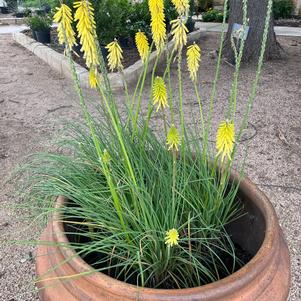
Red Hot Poker (Yellow)Botanical Name: Kniphofia uvaria 'Glowstick'
Kniphofia uvaria 'Glowstick' is a striking and popular plant known for its bright, torch-like flower spikes that bloom from mid-summer to fall. The plant is also commonly referred to as red hot poker or torch lily due to its long, narrow, brightly colored flowers that resemble the shape of a flaming torch. The 'Glowstick' variety of Kniphofia uvaria is a modern cultivar that was developed to have brighter and longer-lasting flowers than the traditional species. This plant features slender, grass-like foliage that forms a clump up to 2 feet tall and wide. The foliage is a vibrant green and is evergreen in mild climates. The flower spikes of Kniphofia uvaria 'Glowstick' grow up to 30 inches tall and are a bright yellow-green color, gradually turning to a vibrant coral-orange as they mature. The flowers are arranged in a dense cluster and are attractive to bees, butterflies, and hummingbirds. Kniphofia uvaria 'Glowstick' is a low-maintenance plant that thrives in full sun to partial shade and well-draining soil. It is drought-tolerant and can adapt to a wide range of soil types. This plant is ideal for mixed borders, rock gardens, and as a specimen plant in containers. [ More Info ]
|
|
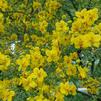
Retama TreeBotanical Name: Parkinsonia aculeata
A fast growing Texas native tree with beautiful long arching, somewhat drooping, branches with thorns at the nodes. Cast a very light shade due to the very small leaves along the stems. Complimented nicely with multitude of bright yellow flowers borne in the spring and continue into the fall. Seed pods up to six inches in length follow, and persist on the tree until next spring when they begin to fall to the ground. Retama tree is highly drought tolerant once established, and has no serious pest or disease issues. [ More Info ]
|
|
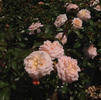
Rose, Apricot Drift ®Botanical Name: Rosa x 'Meimirrote'
[ More Info ]
|
|
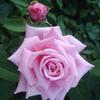
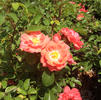
Rose, Belinda's DreamBotanical Name: Rosa chinensis 'Belinda's Dream'
Originally introduced in 1988, Belinda’s Dream is a cross between ‘Tiffany’ and ‘Jersey Beauty’. It is the first rose to receive both a Texas Superstar and Earthkind designation. It’s quite resistant to black spot, mildew, and rust when planted in full sun and highly ventilated areas. The dark blue-green foliage is a handsome backdrop for the large heavy double blooms that emerge on new branches, and have a slight fragrance. They are often borne on long branches, making them ideal for cut arrangements. The shrub maintains an upright growth habit, and is quite sturdy up to five feet in height. Prune heavily in the late winter before spring to encourage heavy bloom set. [ More Info ]
|
|
Rose, Coral Drift®Botanical Name: Rosa x 'Meidrifora'
Coral Drift Roses are a patented rose from Conard-Pyle, and information on them can be found here : http://www.conard-pyle.com/index.cfm/fuseaction/drplants.plantDetail/plant_id/599/index.htm [ More Info ]
|

|
Rose, Knock Out®Botanical Name: Rosa chinensis 'Radrazz'
Originally developed by William Radler, Conard Pyle holds the patent on one of the most popular line of roses that have reinvigorated roses for the Texas landscapes – the Knock Out Roses. The original of several cultivars, ‘Radrazz’ Knock Out Rose is highly resistant to diseases that plague other roses, while being very tolerant of hot and dry climates familiar to Texas. Since introduction, it has become the fastest selling new rose of all time. The single blooms are a deep red cherry color, and appear abundantly in the late winter for a week or two, then drop off only to continue blooming again throughout the summer until first real frost. To maximize the amount of blooms, trimming the shrub midwinter will encourage more branches to fill out the plant, thus more blooms. The foliage is a dark purple hue as it emerges, turning dark green for the summer. In the fall it turns a dark burgundy. Won the All-America Rose award in 2000 when introduced, and Texas Superstar in 2004; Knockout has become a commonplace addition to any landscape since. [ More Info ]
|

|
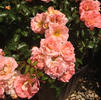
Rose, NacogdochesBotanical Name: Rosa chinensis 'Nacogdoches'
Alternatively known as "Grandma's Yellow", Nacogdoches Rose is the 2009 "Yellow Rose of Texas", a Texas Superstar. Nacogdoches Rose is a spectacular landscape addition, due to the blooming period starting in late winter and continuing till the next freeze. Wild temperature fluctuations will cause it to stop blooming, but only for a short time. The flowers are a rich shade of yellow, and can have up to 25 petals. They stand out nicely against the dark green leaves. Provide adequate drainage, and Nacogdoches Rose can grow in acidic or alkaline soils. [ More Info ]
|
|
Rose, Peach Drift®Botanical Name: Rosa x 'Meiggili'
Peach Drift Roses are a patented rose from Conard-Pyle, and information on them can be found here : http://www.conard-pyle.com/index.cfm/fuseaction/drplants.plantDetail/plant_id/596/index.htm [ More Info ]
|
|
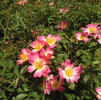
Rose, Pink Drift®Botanical Name: Rosa x 'Meijocos'
Pink Drift Roses are a patented rose from Conard-Pyle, and information on them can be found here : http://www.conard-pyle.com/index.cfm/fuseaction/drplants.plantDetail/plant_id/597/index.htm [ More Info ]
|
|
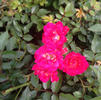
Rose, Red Drift®Botanical Name: Rosa x 'Meigalpio'
Red Drift Roses are a patented rose from Conard-Pyle, and information on them can be found here : http://www.conard-pyle.com/index.cfm/fuseaction/drplants.plantDetail/plant_id/598/index.htm [ More Info ]
|
|
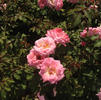
Rose, Sweet Drift®Botanical Name: Rosa x 'Meiswetdom'
Sweet Drift Roses are a patented rose from Conard-Pyle, and information on them can be found here : http://www.conard-pyle.com/index.cfm/fuseaction/drplants.plantDetail/plant_id/968/index.htm [ More Info ]
|
|
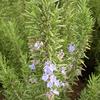
RosemaryBotanical Name: Rosmarinus officinalis 'Gorizia'
Mediterranean native that is no stranger to hot and dry conditions, on top of rocky soils. The highly aromatic needle-like leaves are complimented in the late winter with small blue flowers, no more than one inch in diameter and somewhat tubular. Rosemary requires well-drained alkaline soils, otherwise will be easily prone to disease and dieback when overwatered. No matter the location in the landscape, full sun must be provided. The foliage is commonly used in cooking, aroma therapy, and for medicinal purposes. This cultivar, 'Gorizia' has thicker woody stems that make it ideal to strip leaves and put the food to BBQ right on the stem.
[ More Info ]
|
|
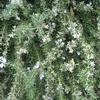
Rosemary, WeepingBotanical Name: Rosmarinus officinalis 'Prostratus'
A Mediterranean native that is no stranger to hot and dry conditions on top of rocky soils. The highly aromatic needle-like leaves are complimented in the late winter with small blue flowers, no more than one inch in diameter and somewhat tubular. The weeping rosemary is an excellent choice for raised beds, where the leaves can drape over and cover the wall. Rosemary requires well-drained alkaline soils, otherwise will be easily prone to disease and dieback when overwatered. No matter the location in the landscape, full sun must be provided. The foliage is commonly used in cooking, aroma therapy, and for medicinal purposes. [ More Info ]
|
|
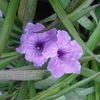
Ruellia, Katie Mexican PetuniaBotanical Name: Ruellia x brittoniana 'Katie'
Dwarf cultivar of Ruellia that grows very quickly, spreading quickly through reseeding. Delicate looking trumpet flowers are a blue-purple hue, and at the top of the plant borne in clusters up to three. They start to appear in late spring, and continue till fall. Highly drought and heat tolerant, and can become invasive if used in small areas.
[ More Info ]
|
|
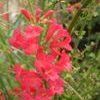
Russelia, RedBotanical Name: Russelia sp.
Native to Mexico, this fast growing small shrub has long slender branches that grow up to four feet tall, then easily cascade over making it ideal for raised flowerbeds. The wirey leaves on the branches are mixed in with clusters of flowers that first appear in the spring and persist till fall. The blooms are one inch in length, red-scarlet and narrow till the end where they open up - resembling small fire crackers. Firecracker plant appreciates regular watering and fertilizer, however can continue to bloom through the dry summer. Easily attracts hummingbirds and butterflies.
[ More Info ]
|
