
Mortellaro's Nursery
Shrubs, trees, ground covers, native plants, and seasonal color
Wholesale Only
Click on any of the alpha indexes below to view the corresponding lists of plants.
The default list is displayed alphabetically by common name for all plant types. You can view the plants by clicking on the Scientific Name or limit the plant type by using the drop down.
Plants actively being grown for the current season are shown -- selecting Discontinued Items will show plants we have offered in the past.
|
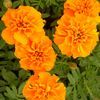
MarigoldBotanical Name: Tagetes erecta 'Janie'
Janie Marigold (Tagetes erecta 'Janie') is a compact, heat-tolerant annual prized for its dense, double blooms in bright yellow, orange, and gold hues. This variety is well-suited for seasonal beds, borders, and container plantings, offering long-lasting color from late spring through fall. The Janie series is specially bred for dwarf growth and prolific flowering, making it an ideal choice for gardeners seeking low-maintenance color in warm climates. Marigolds thrive in full sun and well-draining soil, preferring neutral to slightly acidic conditions. They are highly drought tolerant once established, though regular watering encourages maximum bloom production. Deer and rabbit resistant, marigolds also help repel certain garden pests, making them useful as companion plants in vegetable gardens. Janie Marigolds grow to a mature height of 8-12 inches with a spread of 6-10 inches, forming dense, bushy plants covered in blooms. When planting in groups, spacing of 6-10 inches apart ensures full, even coverage. Compared to taller marigold varieties, the Janie series remains compact and uniform, making it a reliable choice for smaller spaces or edging walkways. In USDA Zones 9-11, marigolds may reseed and return the following year, though they are commonly grown as annuals in Texas landscapes. Removing spent flowers (deadheading) can prolong blooming, keeping gardens vibrant well into the fall. Their ability to withstand heat and poor soil conditions makes them one of the most versatile flowering annuals for warm climates.
[ More Info ]
|
|
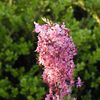
Mexican BuckeyeBotanical Name: Ungnadia speciosa
Mexican Buckeye (Ungnadia speciosa) is a small, deciduous Texas native tree or large shrub appreciated for its light pink, fragrant blooms in early spring and its adaptability to a wide range of soil and weather conditions. It is commonly used in wildlife gardens, understory plantings, or as a small ornamental tree in drought-prone areas of Central and West Texas. This species thrives in full sun to partial shade and grows best in well-drained soil, showing a strong tolerance for alkaline soils and poor rocky conditions. It is highly drought-tolerant once established and deer-resistant, making it a reliable performer in dry landscapes. The seeds are contained in hard, glossy brown pods that rattle when shaken—an appealing feature in naturalistic gardens. Mexican Buckeye typically reaches 10 to 15 feet in height and width, forming a rounded, multi-trunked shape. When planting in groups, allow 8 to 12 feet of spacing. In addition to its attractive flowers and pods, it develops yellow fall color, offering seasonal interest beyond its spring bloom. While sometimes confused with Red Buckeye (Aesculus pavia), Mexican Buckeye is not botanically related. Red Buckeye has red flowers, larger leaves, and prefers slightly more moisture, whereas Mexican Buckeye has pink flowers, smoother leaf texture, and greater drought tolerance. Additionally, their seed pods are shaped differently, and Mexican Buckeye's bark is lighter and smoother. In USDA Zones 7–9, Mexican Buckeye is cold-hardy and typically requires no special winter protection. It responds well to light pruning in winter to maintain its shape or open up its structure. [ More Info ]
|

|
Mexican OreganoBotanical Name: Poliomintha longiflora
Semi-evergreen perennial with purple tubular flowers from early summer to fall. Peforms well in hot and dry Texas summers, blooming more profusely with regular pruning and if grown in full sun. Foliage can be used in cooking - a bit more kick than regular Oregano. No serious pest and disease issues, best grown in well draining soils and full sun. [ More Info ]
|

|
Miscellanous Item #1Botanical Name: Miscellanous Plant
Mortellaro's Nursery will at times have some miscellanous plants around the nursery to sell, and this page is simply a place holder for one of those plants. Assume these plants are of limited quantity, and will not be sold in the future. This page will NOT be updated with information about this plant, you will only see the name of the plant below if it is in stock, and what size, and what price (if you are logged in) [ More Info ]
|

|
Miscellanous Item #10Botanical Name: Miscellanous Plant
Mortellaro's Nursery will at times have some miscellanous plants around the nursery to sell, and this page is simply a place holder for one of those plants. Assume these plants are of limited quantity, and will not be sold in the future. This page will NOT be updated with information about this plant, you will only see the name of the plant below if it is in stock, and what size, and what price (if you are logged in) [ More Info ]
|

|
Miscellanous Item #11Botanical Name: Miscellanous Plant
Mortellaro's Nursery will at times have some miscellanous plants around the nursery to sell, and this page is simply a place holder for one of those plants. Assume these plants are of limited quantity, and will not be sold in the future. This page will NOT be updated with information about this plant, you will only see the name of the plant below if it is in stock, and what size, and what price (if you are logged in) [ More Info ]
|

|
Miscellanous Item #12Botanical Name: Miscellanous Plant
Mortellaro's Nursery will at times have some miscellanous plants around the nursery to sell, and this page is simply a place holder for one of those plants. Assume these plants are of limited quantity, and will not be sold in the future. This page will NOT be updated with information about this plant, you will only see the name of the plant below if it is in stock, and what size, and what price (if you are logged in) [ More Info ]
|

|
Miscellanous Item #13Botanical Name: Miscellanous Plant
Mortellaro's Nursery will at times have some miscellanous plants around the nursery to sell, and this page is simply a place holder for one of those plants. Assume these plants are of limited quantity, and will not be sold in the future. This page will NOT be updated with information about this plant, you will only see the name of the plant below if it is in stock, and what size, and what price (if you are logged in) [ More Info ]
|

|
Miscellanous Item #14Botanical Name: Miscellanous Plant
Mortellaro's Nursery will at times have some miscellanous plants around the nursery to sell, and this page is simply a place holder for one of those plants. Assume these plants are of limited quantity, and will not be sold in the future. This page will NOT be updated with information about this plant, you will only see the name of the plant below if it is in stock, and what size, and what price (if you are logged in) [ More Info ]
|

|
Miscellanous Item #15Botanical Name: Miscellanous Plant
Mortellaro's Nursery will at times have some miscellanous plants around the nursery to sell, and this page is simply a place holder for one of those plants. Assume these plants are of limited quantity, and will not be sold in the future. This page will NOT be updated with information about this plant, you will only see the name of the plant below if it is in stock, and what size, and what price (if you are logged in) [ More Info ]
|

|
Miscellanous Item #2Botanical Name: Miscellanous Plant
Mortellaro's Nursery will at times have some miscellanous plants around the nursery to sell, and this page is simply a place holder for one of those plants. Assume these plants are of limited quantity, and will not be sold in the future. This page will NOT be updated with information about this plant, you will only see the name of the plant below if it is in stock, and what size, and what price (if you are logged in) [ More Info ]
|

|
Miscellanous Item #3Botanical Name: Miscellanous Plant
Mortellaro's Nursery will at times have some miscellanous plants around the nursery to sell, and this page is simply a place holder for one of those plants. Assume these plants are of limited quantity, and will not be sold in the future. This page will NOT be updated with information about this plant, you will only see the name of the plant below if it is in stock, and what size, and what price (if you are logged in) [ More Info ]
|

|
Miscellanous Item #4Botanical Name: Miscellanous Plant
Mortellaro's Nursery will at times have some miscellanous plants around the nursery to sell, and this page is simply a place holder for one of those plants. Assume these plants are of limited quantity, and will not be sold in the future. This page will NOT be updated with information about this plant, you will only see the name of the plant below if it is in stock, and what size, and what price (if you are logged in) [ More Info ]
|

|
Miscellanous Item #5Botanical Name: Miscellanous Plant
Mortellaro's Nursery will at times have some miscellanous plants around the nursery to sell, and this page is simply a place holder for one of those plants. Assume these plants are of limited quantity, and will not be sold in the future. This page will NOT be updated with information about this plant, you will only see the name of the plant below if it is in stock, and what size, and what price (if you are logged in) [ More Info ]
|

|
Miscellanous Item #6Botanical Name: Miscellanous Plant
Mortellaro's Nursery will at times have some miscellanous plants around the nursery to sell, and this page is simply a place holder for one of those plants. Assume these plants are of limited quantity, and will not be sold in the future. This page will NOT be updated with information about this plant, you will only see the name of the plant below if it is in stock, and what size, and what price (if you are logged in) [ More Info ]
|

|
Miscellanous Item #7Botanical Name: Miscellanous Plant
Mortellaro's Nursery will at times have some miscellanous plants around the nursery to sell, and this page is simply a place holder for one of those plants. Assume these plants are of limited quantity, and will not be sold in the future. This page will NOT be updated with information about this plant, you will only see the name of the plant below if it is in stock, and what size, and what price (if you are logged in) [ More Info ]
|

|
Miscellanous Item #8Botanical Name: Miscellanous Plant
Mortellaro's Nursery will at times have some miscellanous plants around the nursery to sell, and this page is simply a place holder for one of those plants. Assume these plants are of limited quantity, and will not be sold in the future. This page will NOT be updated with information about this plant, you will only see the name of the plant below if it is in stock, and what size, and what price (if you are logged in) [ More Info ]
|

|
Miscellanous Item #9Botanical Name: Miscellanous Plant
Mortellaro's Nursery will at times have some miscellanous plants around the nursery to sell, and this page is simply a place holder for one of those plants. Assume these plants are of limited quantity, and will not be sold in the future. This page will NOT be updated with information about this plant, you will only see the name of the plant below if it is in stock, and what size, and what price (if you are logged in) [ More Info ]
|
|
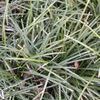
Monkey GrassBotanical Name: Ophiopogon japonicus
Monkey Grass, also known as Mondo Grass (which can easily by confused with Dwarf Monkey Grass) is a versatile, low-maintenance groundcover suitable for Texas landscapes. This herbaceous perennial thrives in USDA Zones 6 through 11 and is well-suited for a wide range of soil types, preferring well-drained, slightly acidic to neutral soils. Though not a Texas native, it is highly adaptable and performs well in shaded areas, tolerating part sun with adequate moisture. Its fine-textured, grass-like foliage creates a lush, uniform appearance, making it an excellent choice for borders, underplanting around trees, or as a lawn alternative in low-traffic areas. Monkey Grass is non-toxic, making it safe for households with pets or children, and it is resistant to deer browsing, adding to its value in Texas gardens. While it does not tolerate prolonged drought, it is moderately drought-tolerant once established, making it ideal for shaded gardens or areas with limited direct sunlight. Reaching a mature height of 6 to 12 inches and spreading slowly through underground rhizomes, Monkey Grass is perfect for filling in small spaces or creating a tidy edge along paths and walkways. Space plants 6 to 10 inches apart for a dense, even coverage. This plant produces small spikes of lavender or white flowers in late summer, followed by dark blue to black berries, adding subtle ornamental interest. Monkey Grass is prized for its year-round evergreen foliage, providing texture and greenery even in winter. Winter care for Monkey Grass is minimal in Texas climates. In colder regions or after frost, the foliage may brown slightly but will rebound in spring. Trimming back old leaves in late winter encourages fresh growth and maintains its neat appearance. [ More Info ]
|
|
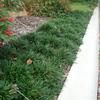
Monkey Grass, DwarfBotanical Name: Ophiopogon japonicus 'Nana'
Dwarf Monkey Grass (Ophiopogon japonicus ‘Nana’), a compact variety of Mondo Grass, is a hardy, low-maintenance groundcover perfect for Texas landscapes. Thriving in USDA Zones 6 through 11, this herbaceous perennial prefers well-drained, slightly acidic to neutral soils and is highly adaptable to a range of conditions. Though not a Texas native, it is an excellent choice for shaded or part-sun areas, withstanding the Texas heat when protected from harsh afternoon sun. Its dense, fine-textured foliage grows in clumps, making it an ideal choice for borders, rock gardens, or as an edging plant along paths and beds. Dwarf Monkey Grass is non-toxic and safe for households with pets and children, and its foliage is resistant to deer browsing. This variety is slower-growing and more compact than standard Monkey Grass, reaching a mature height of just 3 to 6 inches with a spread of 6 to 12 inches. For uniform coverage, space plants 4 to 6 inches apart. It requires minimal water once established, making it a reliable choice for shaded gardens or water-wise landscaping. While it rarely blooms, Dwarf Monkey Grass may produce small lavender or white flowers in late summer, followed by dark berries. Its year-round evergreen foliage adds texture and greenery to any landscape, maintaining its aesthetic appeal even during the winter months. Winter care is straightforward for Dwarf Monkey Grass. In colder regions, the foliage may brown slightly after frost but will recover in spring. Trimming back old or damaged leaves in late winter helps refresh its appearance and encourages healthy new growth. [ More Info ]
|

|
Moss RoseBotanical Name: Portulaca grandiflora
Portulaca, also known as Moss Rose and even Purslane, is a low-growing, heat-loving annual known for its vibrant, semi-double blooms in shades of pink, yellow, red, orange, and white. This fast-spreading groundcover thrives in hot, dry conditions, making it an excellent choice for Texas landscapes, rock gardens, and container plantings. Blooming from spring through fall, it provides continuous color with minimal care. This Portulaca variety prefers full sun and well-draining soil, tolerating both acidic and alkaline conditions. It is exceptionally drought-tolerant, requiring only occasional watering once established. The succulent-like foliage helps retain moisture, making it ideal for xeriscaping and areas with poor soil. It is deer-resistant and attracts pollinators like butterflies. Reaching a mature size of 6-8 inches tall and spreading up to 12-18 inches wide, Portulaca is perfect for mass plantings, edging, and filling in gaps between stepping stones. When planting in clusters, space plants 10-12 inches apart to allow for full coverage. While not known for reliable reseeding, it may self-sow in warm climates. As an annual in USDA Zones 2-11, it thrives throughout the warm season but does not survive hard frosts. In cooler regions, it can be grown in containers and overwintered indoors if desired. No winter care is needed for replanting in spring. Cultivars 2025 Happy Hour TM Mix [ More Info ]
|
|
Mountain LaurelBotanical Name: Dermatophyllum secundiflorum
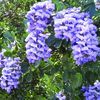
Texas Mountain Laurel is a slow-growing, evergreen shrub or small tree native to Central, South, and West Texas, commonly found growing in rocky limestone soils of the Hill Country. It is prized for its glossy dark green foliage and its highly fragrant purple flower clusters that bloom in early spring, often compared to the scent of grape soda. Bloom color ranges from deep violet to bluish-purple, and mature plants can become spectacular focal points in the landscape. Although rare, white blooming cultivars exist. This plant thrives in full sun and is exceptionally well adapted to alkaline, rocky, well-drained soils. Once established, it is highly drought tolerant and performs best with minimal irrigation. It does not tolerate poorly drained soils. Mature size typically reaches 10–20 feet tall and 8–15 feet wide, though it grows slowly. Space 8–12 feet apart when planting in groups. All parts of the plant — particularly the bright red seeds — are poisonous if ingested. However, the seeds are encased in an extremely hard outer shell. These shells are very tough, resist decay, and can persist on the ground for years, which reduces accidental exposure but means fallen seeds may remain visible long after drop. The plant is generally deer resistant. Texas Mountain Laurel works beautifully as a specimen tree, courtyard accent, entry focal point, or evergreen screen in Hill Country and Central Texas landscapes. Its dense structure and dark foliage provide year-round presence, while its spring bloom season delivers one of the most dramatic floral displays of any Texas native shrub. Botanical Name History For many years, this plant was classified as Sophora secundiflora, which is still widely used in the nursery trade, older literature, and landscape specifications. However, botanical research and genetic studies determined that this North American species was sufficiently distinct from the true Asian Sophora species. As a result, it was reclassified into the genus Dermatophyllum, becoming Dermatophyllum secundiflorum. Because the name change is relatively recent in horticultural terms, both botanical names are still commonly encountered. [ More Info ]
|
|
Myrtle, Southern WaxBotanical Name: Myrica cerifera
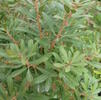
Southern Wax Myrtle is a fast-growing evergreen shrub or small tree native to East and Southeast Texas, commonly found in sandy soils and along woodland edges. It is valued for its fine-textured, aromatic foliage and its ability to form dense screens quickly. Female plants produce small blue-gray berries that are highly attractive to birds. In Texas landscapes, it is widely used for privacy hedges, windbreaks, and naturalized plantings. This plant thrives in full sun to part shade and prefers slightly acidic, well-drained soils, though it will tolerate sandy and moderately poor soils. In Central Texas, performance can vary in heavy alkaline soils, and it prefers soil improvement or placement in more organic and well-drained areas. Once established, it is moderately drought tolerant but performs best with occasional deep watering during extended dry periods. Mature size typically ranges from 10–20 feet tall and 8–15 feet wide, depending on pruning and training. For hedge plantings, spacing 4–6 feet apart allows for quick fill-in. It is not considered toxic and is generally deer tolerant once established. Southern Wax Myrtle responds well to pruning and can be maintained as a large shrub or trained into a small multi-trunk tree. Because it is fast growing, occasional shaping may be required to maintain a tidy form in formal landscapes. It is particularly well suited for East Texas and Gulf Coast regions but can perform in Central Texas with proper site selection and soil awareness. [ More Info ]
|
|
Nandina, CompactBotanical Name: Nandina domestica 'Compacta'
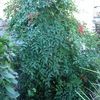
Compact Nandina is a shorter, denser selection of Heavenly Bamboo that offers the texture and seasonal color of standard nandina in a more manageable size. It produces light spring flowers followed by red berries, though typically less heavily than the older domestic form. This cultivar is often used where a mid-height evergreen shrub is desired without the tall, cane-like habit of standard nandina. It performs well in full sun to part shade and adapts to a range of Texas soils, including moderately alkaline conditions common in Central Texas. Afternoon shade can help reduce summer stress in hotter areas. Once established, it is moderately drought tolerant but benefits from occasional irrigation during prolonged dry periods. Mature size typically reaches 4–6 feet tall and 3–4 feet wide, forming a fuller, more compact habit than the standard type. Space 30–36 inches apart for hedges or mass plantings. As with all fruiting nandinas, berries are considered toxic if consumed in large quantities. In production, Compact Nandina should be propagated vegetatively to maintain its true growth habit. Seed-grown plants can revert toward the taller, standard domestic form and lose the compact characteristics that define this selection. For consistency and uniformity, it is best produced from cuttings or tissue-cultured liners sourced from reputable suppliers. In landscapes, it works well for mid-level screening, background plantings, and evergreen structure where predictable size is important. [ More Info ]
|
|
Nandina, DomesticBotanical Name: Nandina domestica
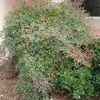
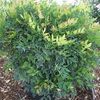
Domestic Nandina, commonly known as Heavenly Bamboo, is an upright evergreen shrub long used in Texas landscapes for its textured foliage and bright red winter berries. It produces clusters of white flowers in late spring followed by abundant red fruit in fall and winter. While ornamental and colorful, this standard form is known for heavy berry production and the potential to reseed in favorable conditions, especially in East Texas and more humid regions. This shrub performs well in full sun to part shade and adapts to a wide range of Texas soils, including moderately alkaline conditions. In Central Texas, it benefits from some afternoon shade and occasional irrigation during extended summer drought. Mature size typically reaches 6–8 feet tall and 3–5 feet wide with an upright, cane-like growth habit. Space plants 3–4 feet apart when planting as a screen or informal hedge. Nandina berries are considered toxic if consumed in quantity, particularly to pets and wildlife, which is an important consideration when selecting planting locations. Domestic Nandina is best used where height and seasonal berries are desired, such as background plantings, informal screens, or mixed shrub borders. However, for landscapes where invasive spread or heavy fruit production is a concern, dwarf or sterile cultivars may be a more responsible alternative. In Texas wholesale production and specification, it is important to distinguish between standard fruiting types and improved selections with reduced berry set. [ More Info ]
|
|
Nandina, Gulf streamBotanical Name: Nandina domestica 'Gulf stream'
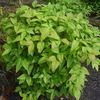
Gulf Stream Nandina is a compact, colorful selection of Heavenly Bamboo prized for its vibrant foliage and restrained growth habit. Unlike older standard nandina varieties that produce heavy berry crops and may reseed freely, ‘Gulf Stream’ is known for minimal fruit production and a more controlled, clumping form. It is grown primarily for foliage color rather than berries, making it a more landscape-friendly choice for Texas properties where invasive spread is a concern. This evergreen shrub thrives in full sun to part shade and adapts well to a variety of Texas soils, including moderately alkaline conditions common in Central Texas. It benefits from some afternoon shade in hotter zones to prevent summer stress. Once established, it is moderately drought tolerant but performs best with occasional deep watering during extended dry periods. Mature size typically reaches 3–4 feet tall and 3–4 feet wide with a dense, upright-mounded form. Space plants 30–36 inches apart for mass plantings. As with all nandinas, berries (when present) are considered toxic if consumed in large quantities, though fruiting on this cultivar is generally limited. ‘Gulf Stream’ is especially valued for its dynamic foliage color. New growth emerges bright copper-orange, transitions to deep green in summer, and then develops rich red and burgundy tones in fall and winter. It works well in foundation plantings, commercial borders, entry accents, and mass plantings where consistent color and tidy structure are desired without aggressive suckering. [ More Info ]
|
|
Nandina, NanaBotanical Name: Nandina domestica 'Nana Atropurpurea'
Nana Nandina ‘Nana Atropurpurea’ is a compact, dwarf selection of Heavenly Bamboo grown primarily for its dense habit and rich foliage color rather than flowers or fruit. Unlike older standard nandina varieties that produce heavy crops of red berries and may reseed, ‘Nana Atropurpurea’ is valued for its minimal to no fruit production and controlled growth habit. In Texas landscapes, it is widely used as a low border plant, foundation accent, or mass planting where dependable color is desired without aggressive spreading. This evergreen shrub performs best in full sun to part shade and adapts well to a range of Texas soils, including moderately alkaline conditions common in Central Texas. In hotter areas, light afternoon shade can help maintain foliage color and reduce stress. Once established, it is moderately drought tolerant but benefits from occasional deep watering during extended dry periods. Mature size typically reaches 2–3 feet tall and 2–3 feet wide, forming a tight, mounded shape. Space 24–30 inches apart when planting in groups. While nandinas are considered toxic if berries are consumed in quantity, the limited fruiting of this cultivar significantly reduces that concern. ‘Nana Atropurpurea’ is especially prized for its seasonal foliage shifts. New growth emerges reddish-bronze, matures to green in summer, and then turns vibrant shades of red to burgundy in fall and winter. Because it does not aggressively sucker or reseed like older berry-producing varieties, it is a more landscape-friendly option for commercial properties, residential foundations, and formal plantings where low maintenance and predictable performance are important. [ More Info ]
|
|
Oak, BurBotanical Name: Quercus macrocarpa
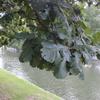
Bur Oak is a large, long-lived oak native to much of North America and found naturally in parts of North and Central Texas. It is well known for its massive acorns with fringed caps and its thick, deeply furrowed bark. In Texas landscapes, it is valued as a durable, adaptable shade tree capable of handling a wide range of soil conditions, including heavier clays and alkaline soils common throughout Central Texas. This oak thrives in full sun and tolerates both drought and periodic wet conditions once established, making it one of the more soil-flexible large oaks. It adapts to alkaline limestone soils better than many Red Oaks and is often recommended where soil conditions are challenging. It is not considered toxic, though, like other oaks, excessive acorn consumption may affect livestock. Deer may browse young trees during establishment. Mature size typically reaches 60–80 feet tall and 50–60 feet wide, developing a broad, rounded canopy. Spacing 40–60 feet apart allows proper canopy development in larger landscapes. Bur Oak is best suited for large residential properties, parks, ranch land, and commercial sites where a substantial shade tree is desired. It develops a strong central leader when trained properly and becomes a commanding, legacy tree over time. Fall color is generally yellow to yellow-brown in Texas, though it is grown more for structure and longevity than for vibrant autumn color. Oak Wilt Awareness: Oak Wilt Groups : Red Oak Group - Most susceptible; often fatal quickly Burr Oak (Quercus macrocarpa) belongs to the White Oaks group [ More Info ]
|
|
Oak, ChinquapinBotanical Name: Quercus muehlenbergii
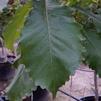
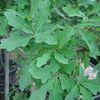
Chinkapin Oak (also spelled Chinquapin Oak) is a Texas native oak commonly found in limestone soils of Central and North Texas. It is well adapted to alkaline conditions and is considered one of the best-performing native shade oaks for the Hill Country and surrounding regions. Its glossy, serrated leaves resemble those of chestnut trees, and in fall they turn attractive shades of golden yellow to bronze. This oak thrives in full sun and performs exceptionally well in rocky, well-drained, alkaline soils. Once established, it is quite drought tolerant, though it benefits from occasional deep watering during extended dry periods. It is not considered toxic, though acorns can cause issues for livestock if consumed in large quantities. Deer may browse young trees, but mature trees are generally not heavily damaged. Chinkapin Oak typically reaches 40–60 feet tall and 40–50 feet wide, developing a broad, rounded canopy. When planting multiple trees, spacing 30–40 feet apart allows for proper canopy development. Chinkapin Oak makes an excellent long-term shade tree for residential landscapes, ranch properties, parks, and large commercial sites. It tends to have strong branch structure and good wind resistance when properly trained in youth. Compared to many Red Oaks, it often shows better tolerance to limestone soils and is a dependable performer in Central Texas landscapes Oak Wilt Awareness: Oak Wilt Groups : Red Oak Group - Most susceptible; often fatal quickly Chinkapin Oak belongs to the White Oak Group. [ More Info ]
|
|
Oak, LaceyBotanical Name: Quercus laceyi
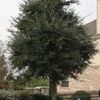
Lacey Oak is a highly regarded Texas native oak found naturally in the Hill Country and limestone regions of Central and West Texas. Known for its distinctive blue-gray foliage and manageable size, it is often considered one of the most refined and drought-adapted native oaks for residential landscapes. In fall, its leaves can turn shades of golden yellow to soft orange, offering reliable seasonal color even in warmer parts of the state. This oak thrives in full sun and is exceptionally tolerant of alkaline, rocky, and well-drained soils common throughout Central Texas. It is highly drought tolerant once established and performs well in low-input landscapes. Unlike many larger oaks, it remains a more moderate size, typically reaching 25–40 feet tall and 25–35 feet wide, making it well suited for smaller properties or as a secondary shade tree. Spacing 25–30 feet apart allows proper canopy development. It is not considered toxic, and while deer may browse young trees, it is generally more deer-resistant than many ornamental species once established. Lacey Oak is ideal as a Hill Country native specimen, street tree for narrower spaces, or focal point in xeric and limestone-based landscapes. Its strong structure, slower growth rate, and adaptability make it a dependable long-term choice for Central and West Texas conditions where larger Red Oaks may struggle. Oak Wilt Awareness: Oak Wilt Groups : Red Oak Group - Most susceptible; often fatal quickly Lacey Oak (Quercus laceyi ) belongs to the White Oaks group [ More Info ]
|
|
Oak, LiveBotanical Name: Quercus virginiana
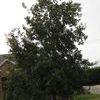
Live Oak is one of the most iconic and widely planted shade trees in Texas, known for its massive, spreading canopy and evergreen foliage. While Quercus virginiana is native to the southeastern United States and coastal regions, the Live Oaks commonly seen across Central and West Texas are often closely related to Escarpment Live Oak (Quercus fusiformis), which is the true interior Texas native. Over decades of nursery production and planting, Live Oak has become a defining tree of ranches, municipalities, and large residential landscapes throughout the state. Live Oak thrives in full sun and is exceptionally well adapted to Texas heat, wind, drought, and alkaline soils once established. It prefers well-drained soils but tolerates heavy clay if not chronically waterlogged. It is not considered toxic, though acorns can cause minor digestive issues in livestock if consumed in large quantities. Deer may browse young trees but typically leave mature specimens alone. Mature size generally reaches 40–60 feet tall with a canopy spread of 60–80 feet or more, often wider than tall. When planting multiple trees, spacing 40–60 feet apart allows proper canopy development. This tree is best used as a legacy shade tree, ranch specimen, windbreak component, or large property anchor. Its dense canopy provides exceptional summer shade, and although evergreen, it sheds older leaves briefly in early spring before pushing new growth. Early structural pruning is important to develop strong branch architecture capable of supporting its broad, heavy canopy for generations. Oak Wilt Awareness: Oak Wilt Groups : Red Oak Group - Most susceptible; often fatal quickly Live Oak (Quercus virginiana) belongs to the Live Oaks group [ More Info ]
|
|
Oak, MexicanBotanical Name: Quercus polymorpha
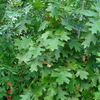
The Mexican Oak, also known as Monterrey Oak, is a versatile and resilient tree well-suited for Texas landscapes. This semi-evergreen species is known for retaining much of its foliage through winter, typically dropping 50-75% of its leaves in early spring just before new growth emerges. This results in many concerned homeowners that think something may be wrong with the tree, however we like to consider the Mexican Oak the “burlesque dancer” of the oak family – graceful, unique, and a little unconventional in its timing. The leaves themselves can be unconventional in a sense, as they vary from tree to tree. This is one reason the scientific name is “polymorpha”. The texture is always the same, but shape and lobe depth varies tree to tree. While a mature height of 80 feet is possible, it will average 60 feet in a normal landscape. It serves as an excellent shade tree for large properties, parks, or open spaces. As a member of the white oak group, the Mexican Oak is highly resistant to Oak Wilt, a devastating disease that affects many other oak species in Texas. This resistance makes it an excellent choice for areas where Oak Wilt is a concern. Its adaptability to various soil types, including rocky or alkaline soils, and its tolerance to heat and drought make it particularly well-suited for Texas's challenging climate conditions. The tree thrives in full sun and requires minimal maintenance once established, making it a favorite among landscapers and homeowners alike. The Mexican Oak is not only functional but also aesthetically appealing, with a dense, rounded canopy that provides excellent shade. Its semi-evergreen nature ensures year-round visual interest, while its sturdy growth habit makes it highly durable against wind and storms. Whether used as a specimen tree or in group plantings, the Mexican Oak offers a combination of beauty, disease resistance, and environmental adaptability, making it a standout choice for Texas landscapes. Oak Wilt Awareness: Oak Wilt Groups : Red Oak Group - Most susceptible; often fatal quickly Mexican Oak (Quercus polymorpha) belongs to the White Oak group [ More Info ]
|
|
Oak, RedBotanical Name: Quercus shumardii
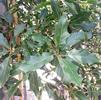
Shumard Red Oak is a large, long-lived shade tree native to Texas and widely found in river bottoms and deep soils across the state. It is one of the most dependable Red Oaks for Texas landscapes, valued for its strong structure, adaptability, and brilliant fall color ranging from deep red to red-orange in good years. In Central Texas, it performs best in deeper soils with moderate moisture and is often used as a legacy shade tree for large residential lots, parks, and commercial landscapes. This oak prefers full sun and adapts to a range of soil types, including alkaline soils common in Central Texas, provided drainage is good. While more drought-tolerant than many other Red Oaks once established, it benefits from deep, occasional watering during prolonged summer drought. It is not considered poisonous, though acorns should not be consumed in large quantities by livestock. Deer may browse young trees, so protection is recommended during establishment. Mature size typically reaches 60–80 feet tall and 40–50 feet wide, with a broad, rounded canopy. When planting multiple trees, spacing 30–40 feet apart allows proper canopy development. Shumard Red Oak is ideal as a primary shade tree, street tree (where space allows), or anchor specimen in large landscapes. It develops a straight trunk and strong branching structure when properly trained in youth, making early structural pruning important. Fall color is generally more reliable in North and Central Texas than in deep South Texas due to cooler autumn temperatures. Oak Wilt Awareness: Oak Wilt Groups : Red Oak Group - Most susceptible; often fatal quickly Shumard Red Oak (Quercus Shumardii) belongs to the Red Oak group [ More Info ]
|
|
Oak, SierraBotanical Name: Quercus canbyi
Sierra Oak (rarely referred to as Canby Oak) is a semi-evergreen oak native to northeastern Mexico and valued in Texas landscapes for its fast growth and dense canopy. Though not a Texas native, it has adapted well to much of Central and South Texas and is often chosen as an alternative to live oak when a quicker shade tree is desired. Its narrow, glossy green leaves give it a refined appearance compared to broader-leaf oaks. Sierra Oak performs best in full sun and prefers well-drained soils. It tolerates alkaline soils common throughout Central Texas and establishes relatively quickly when properly watered during its first few years. Once established, it demonstrates good drought tolerance, though it benefits from occasional deep watering during extended dry periods. Poor drainage should be avoided, as overly wet soils can reduce vigor. In the landscape, Sierra Oak is used primarily as a fast-growing shade tree for residential yards, commercial properties, and street plantings. Mature size typically ranges from 40 to 50 feet tall and 25 to 30 feet wide, forming a dense, rounded canopy. Spacing trees 25 to 30 feet apart allows adequate room for canopy spread and airflow. It is generally considered deer tolerant once established, though young trees may require protection from browsing. Sierra Oak is non-toxic to pets and people, though acorns can cause mild digestive upset if consumed in large quantities. In colder parts of Central Texas, it may drop some or most of its leaves during winter, especially after hard freezes, but typically leafs back out quickly in spring. Its rapid growth and full canopy make it a popular choice where quicker shade is desired. Oak Wilt Awareness: Oak Wilt Groups : Red Oak Group - Most susceptible; often fatal quickly Sierra Oak (Quercus canbyi) belongs to the Red Oak group [ More Info ]
|
|
Oleander, DwarfBotanical Name: Nerium oleander 'cv.'
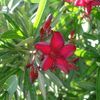
Oleander is a popular evergreen blooming landscape shrub that presumably originated from Asia; in the genus Nerium, it is the only species with over 400 cultivars accounted for. A popular choice due to its rapid growth habit, marvelous blooms, and tolerance to drought and poor soils. Oleander sends out large erect stems outward from its base in every direction. The leaves are arranged in whorls around the branches, bright to dark green, thick and leathery reaching up to six inches in length. The dwarf cultivars leaves are slightly smaller, and overall the plant matures at five feet. Every spring, clusters of flowers up to one and a half inches in diameter emerge on the tips of new branches, persisting for several weeks, and then continue to emerge sporadically throughout the season. The fruits that follow are long narrow capsules that contain numerous seeds. Oleander is one of the most poisonous landscape plants available – every part of the plant is toxic. Lately, it has had serious issues with bacterial blight, which is easily cultivated in areas without good air circulation or high moisture. The first stages result in black and brown spots on the leaves, followed by total defoliation of stems. Once canker growths are forming on the stems, it’s too late to try and save. The bacteria will remain in the soil, so any new oleanders that are planted there will surely get the disease again. [ More Info ]
|
|
Olive, ArbequinaBotanical Name: Olea europaea 'Arbequina'
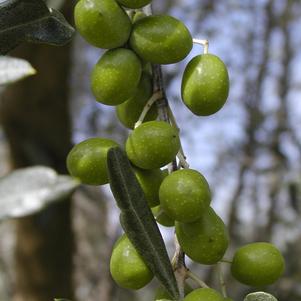
‘Arbequina’ Olive is a Spanish olive cultivar prized for its compact growth habit and reliable fruit production. Compared to larger olive varieties, ‘Arbequina’ tends to have a somewhat smaller canopy and begins producing at a younger age, making it popular for small orchards and residential landscapes. Its narrow gray-green foliage and softly twisting trunk give it a classic Mediterranean appearance well suited for courtyard and patio settings. Arbequina performs best in full sun and requires excellent drainage above all else. It prefers neutral to slightly alkaline soils and adapts well to the limestone soils common in Central Texas when planted in well-drained sites. Once established, it is highly drought tolerant and benefits from deep, infrequent irrigation. Overwatering and heavy soils greatly increase the risk of root decline and reduce cold hardiness. In the landscape, ‘Arbequina’ is commonly used as a specimen tree, espalier candidate, or small orchard tree. Mature size typically reaches 15–20 feet tall and wide, making it slightly more manageable than some other olive cultivars. Spacing trees 12–18 feet apart allows proper canopy development and airflow. Small creamy white flowers appear in spring, followed by olives that ripen from green to purple-black. It is considered moderately deer resistant. Like other olives, Arbequina has seen reduced popularity in parts of Texas due to repeated severe freeze events in recent years. While it can tolerate brief drops into the upper teens once established, prolonged hard freezes have caused widespread damage to both residential plantings and commercial orchards. In Central Texas, success depends heavily on planting location, drainage, and winter protection. Olive foliage and fruit are non-toxic, though fallen fruit can create minor cleanup concerns. [ More Info ]
|
|
Olive, MexicanBotanical Name: Cordia boissieri
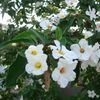
Mexican Olive, or Anacahuita, is a Texas native small evergreen tree prized for its large, showy white flowers and soft gray-green foliage. Native to South Texas and northern Mexico, it brings a distinctive South Texas character to landscapes with its velvety leaves and repeated blooming habit. The flowers resemble white hibiscus blooms with a yellow throat and can appear several times throughout the warm season. Mexican Olive thrives in full sun and prefers well-drained soils, especially sandy, rocky, or limestone-based soils common in South and parts of Central Texas. It tolerates alkaline soils well and is highly drought tolerant once established. Poor drainage and excessive irrigation should be avoided, as overly wet soils can reduce vigor and cold hardiness. Afternoon heat is not an issue, and strong sun promotes heavier flowering. In the landscape, Anacahuita works beautifully as a specimen tree, courtyard accent, or informal patio tree. Mature size typically ranges from 15–25 feet tall and 10–20 feet wide, often forming a multi-trunk structure. Spacing trees 12–15 feet apart allows room for canopy development. It is considered moderately deer tolerant, though young plants may need protection in high-pressure areas. Mexican Olive is non-toxic to pets and people. However, it is best suited for South Texas and the warmest parts of Central Texas. Temperatures in the low 20s can cause significant damage, and hard freezes may result in dieback or loss in colder winters. Planting in protected microclimates and providing freeze protection during severe cold events greatly improves survival in Central Texas. [ More Info ]
|
|
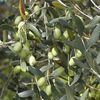
Olive, MissionBotanical Name: Olea europaea 'Mission'
'Mission' Olive is a classic Mediterranean olive cultivar valued for both ornamental appeal and edible fruit. It features narrow gray-green foliage with silvery undersides and a naturally gnarled trunk over time, giving it a timeless Old World character. In Texas landscapes, it has been used as both a specimen tree and small orchard planting where conditions allow. Mission Olive performs best in full sun and requires excellent drainage. It prefers neutral to slightly alkaline soils and tolerates the limestone-based soils common in Central Texas, provided water does not stand around the roots. Once established, it is highly drought tolerant and performs best with deep, infrequent watering. Overly wet soils or heavy irrigation significantly reduce vigor and increase cold susceptibility. In the landscape, Olea europaea ‘Mission’ is typically used as a specimen tree, courtyard accent, or small orchard tree. Mature size generally reaches 20–30 feet tall and 15–20 feet wide, though it can be maintained smaller with pruning. Spacing trees 15–20 feet apart allows proper canopy development. Creamy white spring flowers are followed by green fruit that ripens to purple-black if pollination is successful. It is considered moderately deer resistant. In Texas, olives have experienced a noticeable downturn in popularity due to repeated severe freeze events. While mature trees can tolerate brief cold into the upper teens, prolonged hard freezes—such as those experienced in recent years—have caused widespread dieback and loss. Several Texas olive orchards were significantly damaged or abandoned after consecutive freeze winters. In Central Texas, planting in protected microclimates and avoiding low-lying frost pockets is critical, but customers should understand there is measurable cold risk. Olive foliage and fruit are non-toxic, though fruit drop can create cleanup considerations. [ More Info ]
|

|
Olive, Mission (Standard Form)Botanical Name: Olea europaea 'Mission'
Native to the Mediterranean, Olive trees have quickly found their place in the Texas landscape. They are utilized for their hardiness with the weather, tolerance to poor soils, and manageable size. Some of the olive trees overseas are known to be over 1,000 years old. The Olive tree often has multiple trunks, however often trained to have a single trunk; if it severely damaged or cut down, new trunks will emerge from the roots. The grey-green leaves are thick and leathery, with stomata on the undersides that aid in water conservation. Flower buds are borne on the axils of leaves, often budding up a year before they open. The inflorescences average 15 to 30 flowers, but are often inconspicuous, but with a slight fragrance. The drupe olive fruits start green, and turn black when they ripen in the fall. It is commonly believed they are toxic, however they are simply extremely bitter and often get cured before being eaten. [ More Info ]
|
